


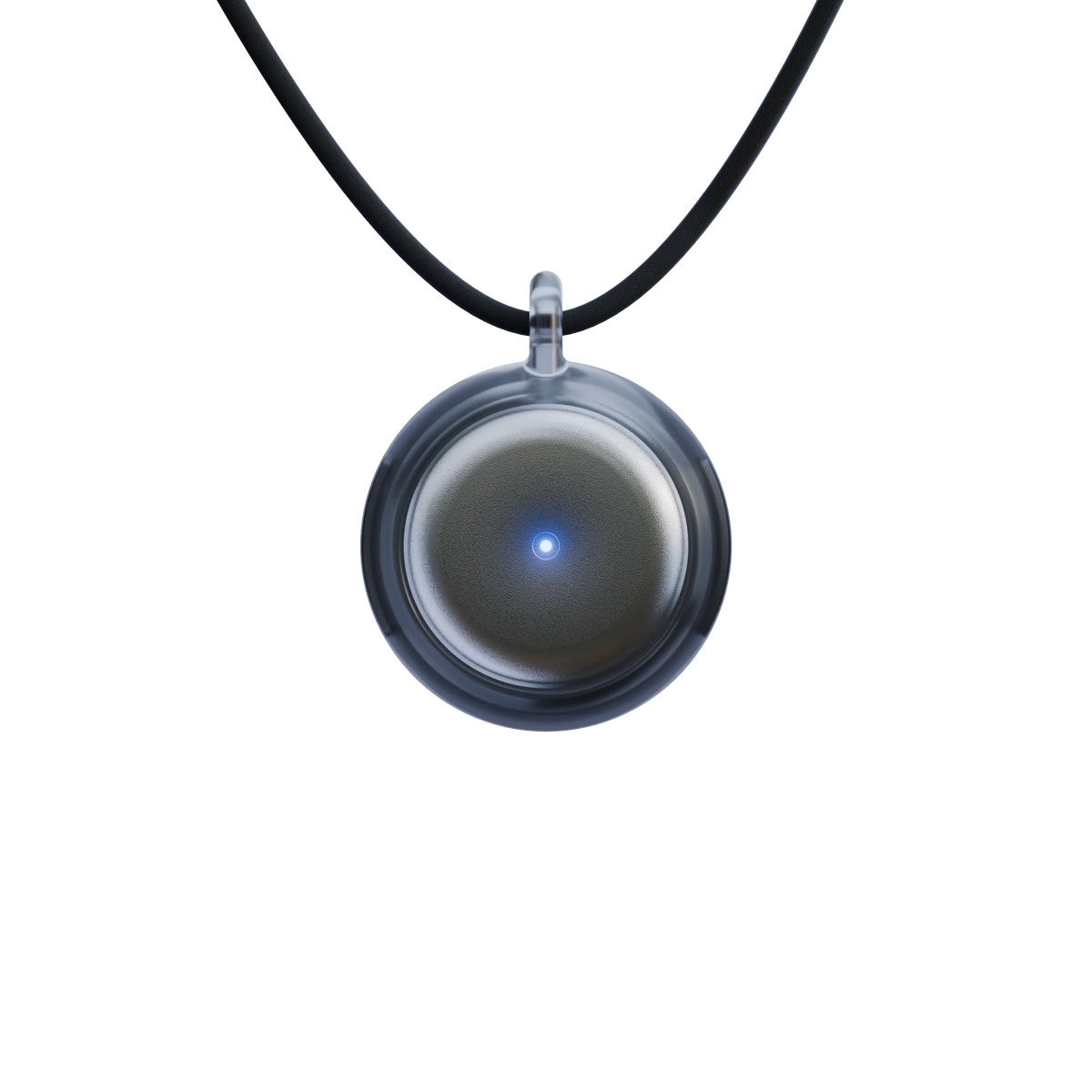
Short answer: buy Bee if you want the cheapest always-on wearable, a week of battery and a company that says it never stores your audio, and you use an iPhone in the US. Buy Omi if you want open-source hardware and software, Android or desktop apps, and the option to play back audio, and you're fine with a pendant that needs charging daily. Both listen all day without a button. They differ on price, battery, platforms and what happens to the sound.

Image: Omi
Bee vs Omi at a glance
| Bee Pioneer | Omi | |
|---|---|---|
| Price | $49.99 | $179 (store price) |
| Subscription | Premium announced, price not published | Basic free (300 min/mo); Plus $19/mo or $161.91/yr; Unlimited $29/mo or $269.91/yr |
| How it's worn | Wristband or clip (both included) | Pendant on a neck cord |
| Capture | Always on; stops after 15 minutes of silence by default | Always-on capture; can record offline and sync later |
| Audio handling | "We never store audio recordings" | "may store conversation audio in encrypted form" |
| Indicator | Green LED while capturing | Not published |
| Microphones | Dual | 2 |
| Battery | Up to 7 days (160+ hours) | 10 to 14 hours |
| Apps | iOS (plus Apple Watch); Android early access, not actively supported | iOS, Android, Mac, web |
| Open source | No | Yes, hardware and software |
| Shipping | United States only | Not published on the product page |
Price and three-year cost
Bee Pioneer costs $49.99. Bee has announced a Premium monthly subscription with advanced search, specialized agents and personalization, but has not published a price or launch date. So the honest three-year figure for Bee is $49.99 plus whatever Premium costs, if you choose it.
Omi is $179 on its store. (Omi's landing page was also showing a $129 limited-time offer on the day we checked.) Omi's plans, per its help center, are:
- Basic: free, 300 listening minutes a month. Three years: $179.
- Plus: 1,500 minutes a month at $161.91 a year. Three years: $664.73.
- Unlimited: no minute limit at $269.91 a year. Three years: $988.73.
Paying monthly instead costs more: $863 over three years on Plus and $1,223 on Unlimited, hardware included. Omi says all plans allow continuous recording regardless of minute limits, so the tiers govern how much gets processed in the cloud, not whether the device listens. Omi's product page also mentions unlimited on-phone transcription on the free tier.
Wear and comfort
Bee is small and flexible. It comes with a wristband and a clip, so you can wear it like a fitness band or clip it to a pocket or belt. Omi is a 2.5 cm by 1.5 cm pendant on a neck cord. A pendant sits closer to your mouth and to the people you're talking with, which tends to help pick-up. A wristband is easier to forget you're wearing. Neither is wrong; pick the form you'll actually put on every morning.
Capture: both always on
Neither device needs a button press. Bee listens until it hears 15 minutes of silence by default (other timer options are available) and its LED shows green while capturing. Omi advertises always-on capture and says it can record without a connection and sync later. Bee has a clear light that tells people nearby it's active; Omi doesn't publish an indicator spec on its product page.
Audio handling: the biggest difference
Bee's product page says: "We never store audio recordings. All conversations are: Processed in real-time, Immediately deleted after processing, Never saved or stored." You get transcripts, summaries and to-dos, not a recording library.
Omi's privacy policy says: "In addition, to support certain product functionality (such as audio playback and transcript-quality improvement), we may store conversation audio in encrypted form." Omi's help center adds that audio can be saved, managed and exported on any plan. That's useful if you want to re-listen to a meeting or check a quote, and it's a trade-off if you'd rather no sound file exist at all. For a wider look at this question, see our guide to AI pendants that don't store audio.
Platforms and openness
Omi wins here. It has iOS and Android apps plus a Mac app and a web app, and both the hardware and software are open source, so developers can inspect the code, build apps or run parts of it locally. Bee Pioneer officially supports iOS only, with an Apple Watch app; its Android build is early access and not actively supported. Bee also ships only to US addresses.
Ownership matters to some buyers. Amazon agreed to acquire Bee in July 2025, as TechCrunch reported. Omi's code is public on GitHub.
Battery
Bee wins easily. It claims up to 7 days, or 160+ hours, per charge. Omi lists 10 to 14 hours, which covers a working day but means charging most nights.
Which should you buy?
- Choose Bee if you're in the US on an iPhone, want the lowest price, want a week between charges and prefer that audio isn't kept.
- Choose Omi if you use Android or a Mac, value open source, want audio playback, or want to build on the platform.
Still comparing? We've also put Bee against Vibe Dot, Limitless and Plaud NotePin S, and our comparison page lays out ambient versus press-to-record devices side by side.
FAQ
Is Bee cheaper than Omi?
Yes, on hardware. Bee Pioneer is $49.99 and Omi is $179 on Omi's store. Omi's Basic plan is free with 300 listening minutes a month, and paid plans run $19 or $29 a month. Bee has announced a Premium subscription but has not published a price.
Does Bee or Omi keep recordings of my conversations?
Bee says it never stores audio recordings and that conversations are processed in real time and deleted after processing. Omi's privacy policy says it may store conversation audio in encrypted form to support features such as audio playback.
Does Bee work with Android?
Bee says Bee Pioneer currently supports iOS only. An early access Android build exists on the Play Store, but Bee says it is not actively supported. Omi has iOS and Android apps, plus Mac and web apps.
Is Omi open source?
Yes. Omi describes itself as open hardware and software, with code on GitHub. Bee does not describe its device or app as open source.
Which lasts longer on a charge?
Bee claims up to 7 days (160+ hours). Omi lists 10 to 14 hours on a single charge. Bee wins clearly on battery.
Where Legend One fits
Legend One is always on too, with nothing to press, but it's built around a different idea. It turns speech into text on the device as it's spoken, so no audio file is ever created, and there's no playback. A Halo light shows when it's active. It's made for people with ADHD who lose track of what was said and what they agreed to do, and the Legend App on iOS and Android turns the day into transcripts, daily summaries and automatic to-dos. It costs more: $499 a year including the membership, with unlimited processing and an annual hardware upgrade. If that focus fits you, see Legend One.
Sources: maker pages checked 21 September 2026: bee.computer/bee-pioneer, bee.computer, omi.me/products/omi, omi.me/pages/product, omi.me/pages/privacy, Omi Help Center: Understanding Omi Subscriptions. Press: TechCrunch, 22 July 2025.
Share:
Pebble Index 01 vs Sandbar Stream: Which Voice Ring Should You Buy?
What Is the Raycon AI Notetaker? Price, Specs and How It Compares