


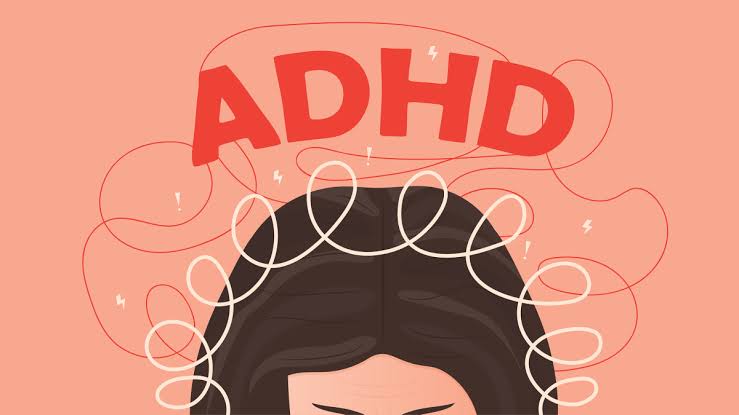
Why Do I Forget Everything People Tell Me?
Someone tells you their name and it is gone before you have finished shaking their hand. Your partner mentions a plan for the weekend and two days later you have no memory of the conversation, which somehow becomes your fault. A coworker gives you three things to do and by the time you sit down you have one, maybe. You are not careless and you are not indifferent. So why does so much of what people tell you seem to evaporate on contact?
The answer has less to do with your character than with how a certain kind of brain handles the moment between hearing something and holding onto it.
Is This an ADHD Thing?
Often, yes. Working memory is one of the executive functions most consistently affected in ADHD, and the specific complaint of losing what someone just said is one of the most common things people with ADHD describe about daily life. If you have spent years being told you do not listen, this is usually the mechanism behind it.
But it is not exclusive to ADHD, and it is worth saying so plainly. Sleep debt, anxiety, grief, thyroid problems, hormonal shifts, certain medications and ordinary cognitive overload all narrow the same window. Forgetting conversations is a symptom with many causes, not a diagnosis. If it is new, getting noticeably worse, or affecting your work or relationships, that is a conversation to have with a clinician rather than something to solve with a device.
The problem is not memory. It is the handoff
We tend to imagine forgetting as something that erodes over time, a slow fade. But a lot of the forgetting that frustrates people happens instantly, in the split second where information is supposed to move from what you just heard into something your brain actually keeps. That handoff is the weak link.
Working memory is the small, temporary space where your brain holds information it is actively using. It is the mental sticky note. For many people, especially those with ADHD, that sticky note is smaller and peels off faster. New information sits there for a moment and then, if something else grabs your attention before it gets filed away, it is simply gone. Not buried, not fuzzy. Never stored in the first place.
Why conversations are the worst case
Conversations are basically the hardest possible environment for a shaky handoff. They move fast. They do not pause while you file things away. And they are packed with the exact kind of details that punish you later for losing, the name, the date, the number, the small promise.
While someone is telling you something, you are also listening for what comes next, thinking about your reply, and managing a dozen tiny distractions in the room and in your own head. By the time you could have locked in the thing they said, three more things have been said on top of it. The name gets buried under the very next sentence. This is why you can genuinely care about a person and still lose what they told you. Attention was somewhere it had to be, and the moment did not wait.
The quiet cost
The frustrating part is rarely the forgetting itself. It is what the forgetting does to your life.
It is the partner who feels unheard because the plan you made together left no trace in your head. It is the reputation at work for dropping details, when the truth is you never got to keep them. It is the exhausting workaround of scrambling to write everything down mid-conversation, which pulls you out of the conversation and makes you miss the next thing anyway. And underneath it all, the low hum of embarrassment that makes you dread the follow-up question you already know you cannot answer.
None of that is a caring problem. It is a capture problem.
What actually helps
The fix is not trying harder to remember. You cannot muscle a handoff that keeps failing at the source. The fix is to stop relying on that handoff for the things that matter, and to move the remembering outside your head entirely.
The catch is that most ways of doing this make the original problem worse. Stopping to type notes pulls you out of the moment. Voice memos mean fumbling for your phone and breaking eye contact. Every manual capture method asks you to choose between being present and keeping the record, which is exactly the trade you did not want to make.
Getting from a captured conversation to something you actually act on is its own step, and we went through it properly in turning conversations into to-dos.
When a Wearable Helps, and When It Does Not
An always-on capture device is a genuinely good answer to one specific failure: things people said out loud, to you, in person, that you would otherwise lose. That is a large slice of the problem, and it is the slice nothing else solves well.
It is not an answer to the rest of it, and anyone selling it as one is overselling. Three cases where it will not help you:
- Information you read rather than heard. The email, the slide, the contract clause, the address in a text message. A device that listens has nothing to listen to. If most of what you lose arrives through your eyes, a microphone is the wrong tool.
- Your own unspoken thoughts. The idea in the shower, the thing you meant to add to the list, the connection you made while driving and never said aloud. If you did not speak it, nothing captured it. Some people fix this by narrating to themselves out loud, which works but is a habit you have to build rather than a feature you can buy.
- Never going back to what you captured. This is the big one. If you already have voice memos you never replay and notebooks you never reopen, the bottleneck is not capture, it is retrieval. Adding a better capture method to a retrieval problem just gives you a larger pile you do not look at. The honest test is whether you would actually search it later.
One more limit worth knowing before you buy anything in this category. Legend transcribes speech to text live as you speak and no audio file is ever created, which means there is nothing to play back. If your need is to verify a quote word for word by listening to it again, you want an actual recorder instead, and we compared the serious ones in Plaud vs Pocket. Devices that keep an audio file can do that. Legend cannot, by design.
If what you want is to stop losing what people tell you, without accumulating a library of everyone's voices in the process, that is the specific trade Legend One makes. It is a $499 USD voice-first pendant built for people with ADHD, worn at chest height, transcribing in real time so the name, the plan and the thing your partner said are held for you without you doing anything at all. No note to take, no button to hit, no moment where you step out of the conversation to preserve it. You stay present, and later the moment is searchable and waiting.
You are not bad at caring about people. Your brain has just never been great at the split-second catch. Something else can do the catching, so you get to keep both the moment and what was said in it. If you want to see how it sits against the rest of the category first, start with the best AI pendants for ADHD.
FAQ
Why do I forget what people tell me immediately? Because the failure usually happens at the handoff, not over time. Working memory holds new information for only a few seconds, and if your attention moves before it is filed away, it was never stored at all rather than stored and then lost.
Is forgetting conversations a sign of ADHD? It is one of the most commonly reported ADHD experiences, since working memory is among the executive functions most affected. It is not diagnostic on its own, though. Sleep debt, anxiety, medication, hormonal changes and plain overload narrow the same window, so persistent or worsening trouble is worth raising with a clinician.
Does writing things down actually help? Yes, but it costs you the conversation. Stopping to type or to reach for a voice memo pulls your attention out of the moment, which is how you miss the next thing that was said. The method works; the timing is the problem.
Can a wearable fix this? For things said out loud to you in person, yes, and that is most of what people lose. It will not help with information you read rather than heard, with thoughts you never said aloud, or if the real problem is that you never go back and look at what you captured.
This piece is for general education and is not medical advice or a diagnosis.
Share:
The Difference Between Listening and Remembering
Why ADHD Brains and Ambient Capture Were Made for Each Other