


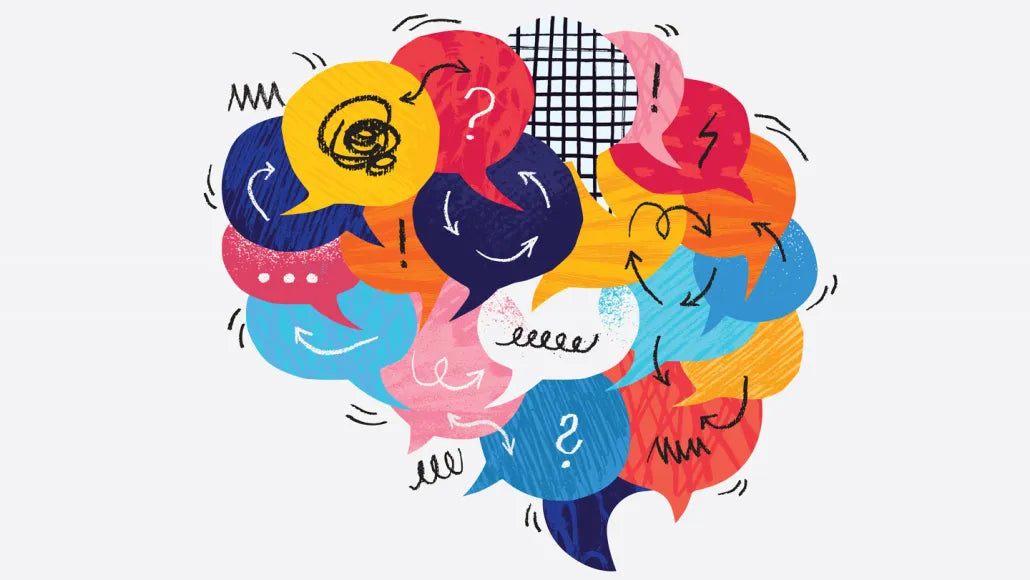
ADHD affects a few distinct areas that most single tools only address one of: holding onto information long enough to act on it, managing a sense of time, and understanding why the condition works the way it does. That's a large part of why stacking unrelated apps and planners tends to fail, while a small set of tools chosen for different jobs tends to hold up.
Below is one pick for each job: a device for capture, an app for time management, and a book for understanding the condition itself. Each covers a different, real piece of the ADHD puzzle rather than overlapping on the same one. If you would rather start with strategies instead of purchases, our page on the five places an ADHD day breaks has free approaches for each.
Best ADHD device: Legend
Capture, not planning, is one of the most common daily frustrations reported with ADHD: the name lost in a handshake, the plan a partner mentioned that left no trace, the idea that vanished before it could be written down. That is a working memory problem, and no to-do list fixes it, because the information never gets held long enough to make the list in the first place.
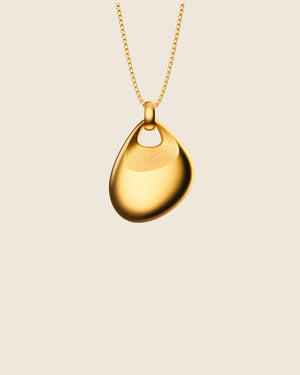
Legend is a memory pendant built around that specific gap. It sits at the collarbone and turns your conversations into text, with no audio to play back and none kept in your account, so information that would otherwise be lost is captured without requiring any action in the moment. There is no button to press, no phone to pull out, no note to take mid-conversation; a Halo light shows when it is active, and afterward the day is available as searchable transcripts, summaries, and to-dos.
What makes this useful for ADHD specifically is that it removes two steps every other memory tool depends on: deciding in the moment to capture something, and keeping that habit up over time. It is designed as jewelry, available in gold, silver, and black, rather than a visible gadget, which affects whether people actually keep wearing it day to day. For more on fit, see who Legend is for, and who should not buy it. If you want to weigh it against the other pendants on the criteria that matter for ADHD, including the cheaper ones, see Best AI Pendant for ADHD.
Best for: anyone who is tired of forgetting names, conversations, and plans, and wants their memory handled without adding another app to manage.
Best ADHD app: Tiimo
If capture is one half of the ADHD struggle, time is the other. Time blindness, the difficulty of feeling how long things take or how much of the day is left, wrecks schedules no matter how good your intentions are. This is where Tiimo shines.
Tiimo is a visual planning app built from the ground up for neurodivergent brains, and it earned real recognition for it. Instead of a dense text list, it turns your day into a color-coded visual timeline, blocks of time you can actually see, with icons and gentle timers that make the next step easy to spot. By making time tangible rather than abstract, it directly targets the time blindness that trips up so many ADHD users, and it lowers the mental load of deciding what to do every time your attention slips.
It is strongest when you use it as a guide for the next few hours rather than a flawless plan for the whole day, which happens to match how ADHD brains actually work. It has a free tier to start, with paid features on top.
Best for: people whose main challenge is time management, transitions, and building routines they can re-enter quickly.
Best ADHD book: Driven to Distraction
Before tools, it helps to actually understand the brain you are working with, and no book has done that for more people than Driven to Distraction by Edward Hallowell and John Ratey. Since its original release it has become the go-to reference for adults trying to make sense of ADHD, and both authors bring the rare combination of clinical expertise and personal familiarity with the condition.
What makes it land is that it explains ADHD through real stories rather than dry symptom lists, it clears up the myths that cause so much shame, and it spends as much time on the strengths of the ADHD brain, the energy, creativity, and intuition, as it does on the struggles. For a lot of readers, it is the first thing that made them feel understood instead of broken.
If you or someone you love was recently diagnosed, this is the one to start with. For readers who want a more modern, women-focused take, books like ADHD for Smart Ass Women by Tracy Otsuka have become popular companions.
Best for: anyone newly diagnosed, or anyone who wants to finally understand why their brain works the way it does.
Putting it together
These three address three different fronts of living with ADHD. Driven to Distraction explains the underlying brain. Tiimo helps manage and visualize time. Legend addresses the capture problem underneath both, transcribing the conversations, names, and plans that would otherwise slip past working memory.
None of this requires thirty apps. It requires a small set of tools that each do one specific job.
This piece is for general education and is not medical advice or a diagnosis. Product and book mentions reflect general reputation, not clinical endorsement.
Share:
Why Conversations Don't Stick, and What Memory Support Actually Does
Plaud vs Pocket AI (2026): Which Recorder to Buy