


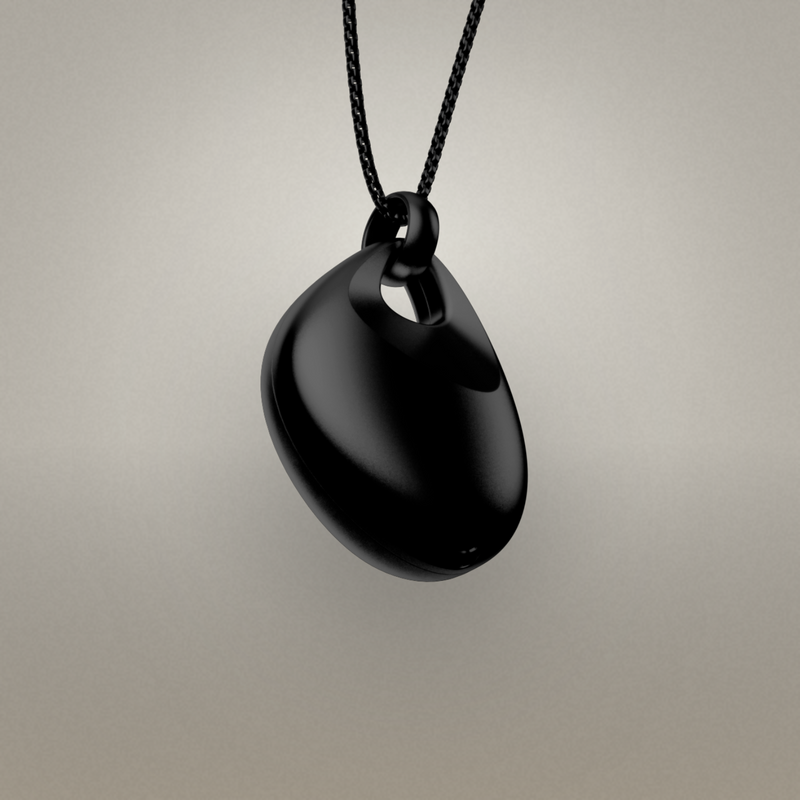
Legend is a necklace because a memory device only works if you wear it all day, if it sits close to the voice, and if it asks nothing of you in the moment. The collarbone does all three. A pendant at chest height hears both sides of a conversation evenly, it does not compete with a watch or a prescription, and it does not live inside the phone that causes most of the distraction in the first place. And because it is made as jewelry, it is something people actually keep on.
| Form factor | Worn all day? | Close to the voice? | Asks for your attention? |
|---|---|---|---|
| Smart glasses | Only if you already wear glasses | Yes | Hardware at eye level that everyone notices |
| Watch or wristband | Often, but the wrist is already taken | No, it moves constantly | Yes, built around notifications |
| Phone app | No | Only when held out | Yes, unlock, open and press record |
| Clip-on pin or desk recorder | Only when you remember | Yes, while clipped on | You have to put it on and start it |
| Pendant at the collarbone | Yes, morning to night | Yes, at chest height | No, it stays on all day |
Why does form factor matter so much for an AI memory device?
When you build a device that remembers your life, the first real decision is not the software or the chip. It is where the thing lives on your body. That choice decides how often you wear it, whether you forget it, whether the people around you feel comfortable, and whether it becomes part of you or ends up in a drawer.
When the goal is remembering rather than recording, consistency matters more than convenience. A device that is on you some of the time can only remember some of your day. Here is how each option holds up.
Why not smart glasses?
Glasses are the obvious answer until you think about the person wearing them. Plenty of people do not wear glasses, and asking them to put something on their face all day is a big request. People who do already have a prescription the device now competes with.
Then there is the social cost. Hardware at eye level reads as surveillance to everyone in the room, even when it is not. Glasses put the technology in the most scrutinised place on the body. We wanted the opposite.
Why not a smartwatch or wrist band?
The wrist is already spoken for. Most people who want something there already have it, and that device is built around notifications, fitness and glancing. Layering an always-on capture device onto a screen you check dozens of times a day pulls it straight back into the loop we were trying to help people escape.
The wrist is also a poor place to listen. It moves constantly, and it is often far from the mouth. It is good for prompts and signals and less good for hearing speech clearly. The wrist works best for glancing, not listening. It is a place for interruption, and memory is the opposite of interruption.
Why not just use a phone app?
An app would have been the easiest path. But the phone is the biggest single source of the distraction Legend exists to reduce. Pulling it out, unlocking it, opening an app, pressing record and remembering to stop asks you to break the exact moment you wanted to keep. By the time the app is open, the moment has moved on.
Phones are designed to demand attention; memory tools work best when they ask for almost none. A memory device that depends on the phone inherits the phone's problems. Legend does not depend on it: if your pendant is away from your phone, audio is held on the pendant until it syncs, then deleted, so it keeps working when your phone is in a bag or another room.
What about clip-on pins and desk recorders?
Both are genuinely good tools. A clip goes on for a meeting or a lecture and comes off afterwards. A desk recorder captures one room well. If your important conversations are scheduled, one of these does the job well and for less money.
Their limit is continuity. A clip only captures what happens while it is clipped on, and it depends on you remembering to put it on at the right time. A desk recorder only knows what happens at the desk. Both document moments. Neither can follow a day as it moves from room to room. Clips work well as tools. They are less suited to being companions.
What makes the collarbone the right place?
The collarbone turned out to be the quiet answer to all of it. It sits below the face, so nothing is staring anyone down. It is not the wrist, so it does not compete with what you already wear or drag you into notifications. And it is not in your pocket, so it is always there without you doing anything.
There is a practical reason too. Worn at chest height, a pendant sits close to the voice and stays in a consistent position as you move, so it never needs to be held, clipped or adjusted. Legend uses three microphones with speaker separation, and chest height is where speech from you and the person facing you carries most evenly. You put it on in the morning and take it off at night, and battery life of up to two days of continuous use means a long day is covered. We walk through how the pendant works, from chest to phone, step by step.
It also stays honest. A Halo light shows whenever Legend is transcribing, so the people around you can see when it is active. And Legend turns your conversations into text, with no audio to play back and none kept in your account.
A necklace is not the best form factor because it does more. It is the best because it asks for less.
Why design an AI device like fine jewelry?
For years wearables asked you to choose between the smart thing and the beautiful thing: a screen on your wrist, or a pendant that did nothing but look good. For an always-on device, that trade matters more than it looks. The device only helps if it is on your body, and it only stays on your body if you want to wear it. So Legend was designed the way jewelry is designed, aesthetics first and technology tucked underneath. Its design language comes from the restraint of the great jewelry houses rather than the tech world: every detail considered, nothing louder than it needs to be, closer to an heirloom than an accessory.
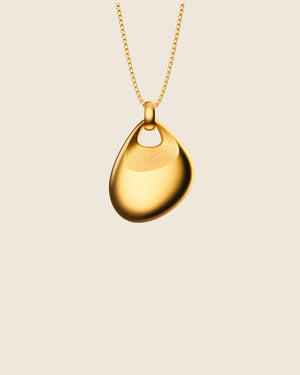
Jewelry has lived at the collarbone for thousands of years. It reads as personal and chosen rather than technical. Legend comes in Gold, Brushed Silver and Matte Black, so the piece fits the person instead of the other way round. There is no screen and no gadget energy. The intelligence stays underneath, turning what is said into transcripts, daily summaries and to-dos in the Legend App, so your brain does not have to hold onto it.
Who is a necklace not right for?
A pendant is a deliberate choice, worn every day, so it suits people who want ongoing support rather than occasional recording. If you only need to capture scheduled meetings, a clip or desk recorder is simpler. If you need to play a conversation back, Legend is the wrong device, because there is no audio to play back. And it is splash resistant, not waterproof, so it comes off for the shower and the pool.
If you want to see how every pendant on the market compares, including cheaper press-to-record options, we lined them up in Best AI Pendant 2026: Every Model Compared. Legend One is a voice-first AI memory pendant made for people with ADHD, for whom remembering to press record is often the step that fails. It is not a medical device and does not treat ADHD. Legend still captures audio to create the transcript, so recording and consent laws may apply where you live. If the necklace approach fits how you live, Legend One is $499 USD including the first year of membership, renewing at $499 a year, with free worldwide shipping. Orders ship within 30 days, then arrive in about 14 business days. We are also plain about who Legend is for, and who should skip it.
FAQ
Why is Legend a necklace instead of glasses or a watch? Because a memory device has to be worn all day, sit close to the voice and stay out of your attention. Glasses put hardware on your face at eye level, the wrist is built for notifications and moves constantly, and a phone app asks you to break the moment to capture it. A pendant at the collarbone avoids all three.
Where is Legend worn? As a pendant at chest height, where speech carries evenly from both sides of a conversation.
Does Legend record audio? Legend turns your conversations into text. Audio is used only to create the transcript and isn't kept in your account. If your pendant is away from your phone, audio is held on the pendant until it syncs, then deleted. There's no audio to play back.
Can people tell when Legend is on? Yes. A Halo light is visible whenever Legend is transcribing.
What finishes does Legend come in? Gold, Brushed Silver and Matte Black.
Is Legend waterproof? No. It is splash resistant, not waterproof.
Who is Legend made for? People with ADHD who lose track of what was said in conversations. It is not a medical device and does not treat ADHD.
Share:
Memoket Gem (2026): Price, Specs and How It Compares
Why Conversations Don't Stick, and What Memory Support Actually Does