


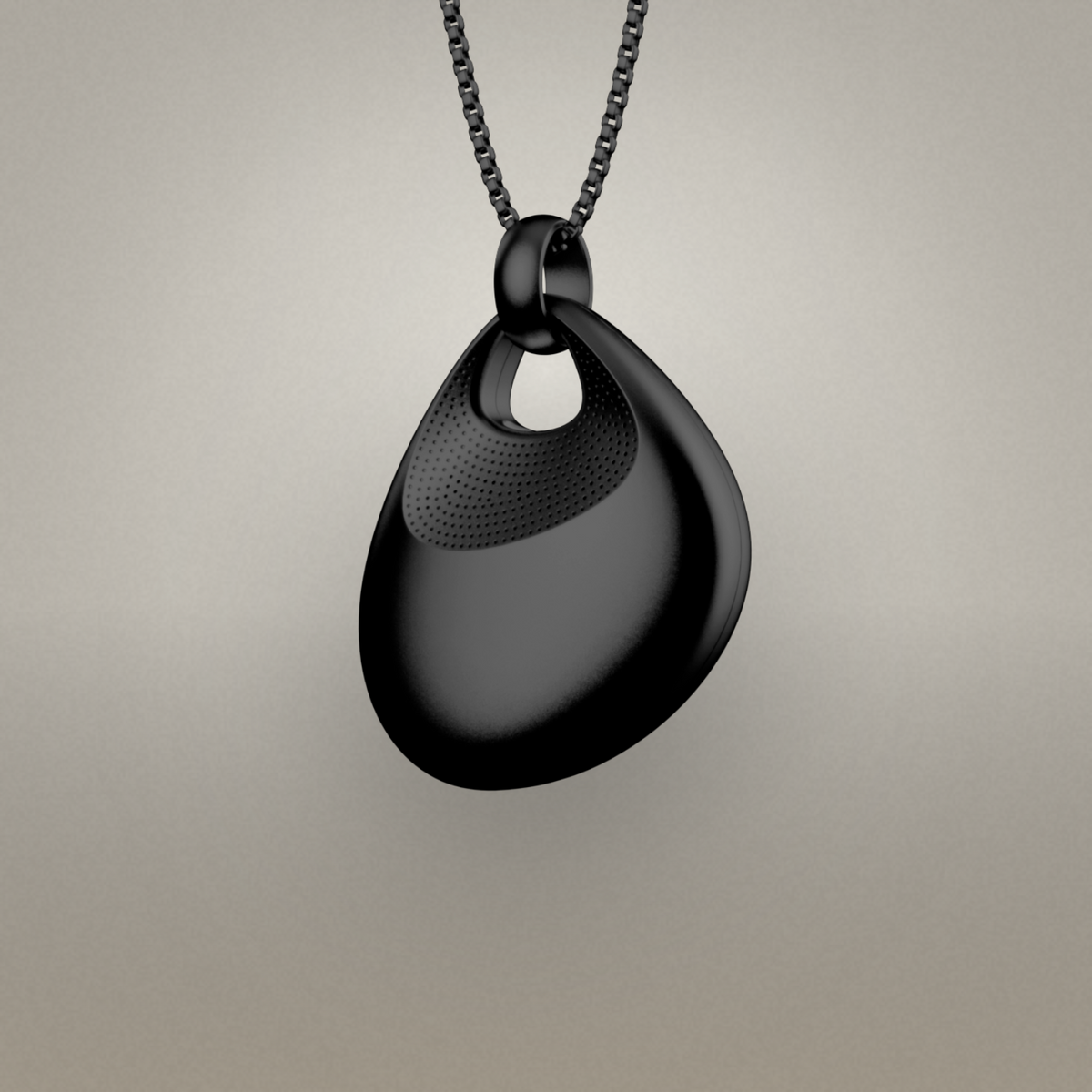
These two devices look like competitors and are not really trying to do the same thing. Vibe Dot is a $199 recorder with excellent hardware that keeps the audio so you can listen back. Legend One is a $499 a year pendant that transcribes as you speak and never creates an audio file. The price gap is large, the free plan gap is larger, and neither of those is actually the deciding factor. Every figure below was checked at both makers' own sites on 19 September 2026.

Legend One vs Vibe Dot at a Glance
| Vibe Dot | Legend One | |
|---|---|---|
| Price | $199, down from $249 | $499, first year of membership included |
| Free plan | Starter, free forever, 300 transcription minutes a month | None. Membership renews annually at $499 |
| Paid plans | Pro $9 per seat per month billed annually ($108/yr), 1,200 min; Max $29 per seat per month ($348/yr), unlimited | No tiers. Unlimited processing, no minute meters |
| Three years, all in | $199 on Starter, $523 on Pro, $1,243 on Max | $1,497 |
| How recording starts | Double tap, press and hold, or Auto capture (Beta) | Nothing. It runs continuously |
| Audio file | Yes. 64GB on board, kept until you delete it | No audio file is ever created at any point |
| Can you listen back? | Yes | No. Transcript only |
| Microphones | Five. Four air plus one bone conduction | Three, with speaker separation |
| Battery | 30 plus hours non-stop recording | Up to 2 days continuous, 5 days standby |
| Worn | Clipped to clothing, magnetic to the back of a phone, or on a desk | Pendant, at chest height |
| Active indicator | Vibration on start and stop | Halo light, visible to everyone |
| Languages | Not published | More than 150 |
| Phones | Vibe AI app | iOS and Android |
| Warranty | 12 months from activation, 30-day returns | While membership is active, 1 year USA / 2 years Australia, 30-day money back |
| Stock, 19 Sep | In stock | In stock |
Where Vibe Dot Wins
The free plan is genuinely free, and that changes the whole comparison. Vibe's Starter tier is described on its pricing page as "Free forever" with "300 mins AI transcription / mo", which Vibe notes "covers about 5 hours of meetings". If five hours a month is enough for you, Vibe Dot costs $199 once and nothing after that. Against Legend at $1,497 over three years, that is not a close call on money. It is only a fair fight if you need more than five hours a month, and plenty of people do not.
The microphone array is better on paper. Vibe publishes "a professional 5-microphone array: 4 high-fidelity air microphones and 1 specialized bone-conduction microphone" against Legend's three. The bone conduction mic is the interesting one, because it picks up your voice through your skull rather than the air, which is how the device separates you from the room in noise.
You can listen back. Vibe Dot has 64GB on board and stores the recording. If a transcript garbles the one number in a conversation that mattered, you can go and hear it. Legend cannot do that, by design, and there is no way to argue around it.
It is more flexible about where it lives. Vibe's help centre documents three carry options: clipped to clothing, magnetically attached to the back of a phone, or sitting on a desk. The magnetic option is specifically recommended for recording phone calls, which is a use case a chest-worn pendant handles badly.
Three capture modes rather than one. Spark for a held-button voice memo, a double tap for a full recording, and a scheduled or voice-triggered Auto capture. If you like having control over what gets captured, that is a feature and not a chore.
Where Legend One Wins
There is nothing to press. This is the entire argument and the only one that matters. Legend runs continuously, so it does not depend on you noticing in advance that a conversation was going to be worth keeping. Vibe Dot's Auto capture mode is aiming at the same problem, and it is the most interesting thing on its spec sheet, but it is still labelled "Beta" on Vibe's own product page today, and its Standby Mode is enabled for a fixed window and requires a Voice ID setup first. Buy Vibe Dot for what it reliably does now, which is record when you tell it to.
No audio file exists. Legend transcribes speech into text as it is spoken, on the device, and syncs the text once your phone is in Bluetooth range. No audio file is ever created at any point, so there is nothing to recover, export or hand over. Vibe's privacy policy takes the opposite approach, and is clear about it: Customer Content including "Audio/Video Recordings and Transcripts" is "stored until you (or your Workspace administrator) delete it", with deleted content "retained for up to 7 days after deletion". That is the right design if you want playback. It is the wrong one if the recording itself is what worries the people you talk to. We compare how devices handle audio, from kept to never created, on our comparison page.
People can see it working. Legend's Halo light shows whenever it is transcribing. Vibe Dot signals with a vibration you feel and nobody else does. If you are going to wear something in front of colleagues, family or a doctor, a visible indicator is worth more than it sounds.
No minute meter. Legend's membership includes unlimited processing. There is no tier to outgrow and no month where capture stops because you hit 300 minutes. Vibe's minutes reset monthly and, in Vibe's own words, allocations "reset monthly without rollover".
Languages are published. Legend supports more than 150. Vibe does not publish a language count or a list anywhere on its site, and the only reference we could find is an app setting that defaults to English. That does not mean Vibe is English-only, it means you cannot check before buying.
The Thing Both Companies Are Vague About
It is worth reading Vibe's own answer on offline use carefully, because the marketing and the documentation are pulling in different directions. The product page badges the Dot as working "online & offline" and heads one FAQ tab "On-device AI". The answer underneath says something narrower: "Vibe Dot stores your audio locally and syncs it to the Vibe AI App on your phone via Bluetooth... Your phone then handles the upload to the cloud for AI processing." So the capture is offline. The transcription is not. You can record in a dead zone and you will get your text later, once the file has moved to your phone and then to Vibe's cloud, and Bluetooth transfer runs at roughly 50KB per second unless you use the faster Wi-Fi transfer, which temporarily disconnects your phone from its own network.
Legend's position here is the cleaner one and we should state it plainly rather than smugly: transcription happens on the device, and what crosses to your phone is text. That is a smaller payload and a different privacy profile. It is also why there is no playback. If you want the full picture, we set out how Legend works from pendant to phone.
The Money, Honestly
Hardware price is the least useful number in this category. Over three years:
- Vibe Dot on Starter: $199. Hardware once, nothing after. Capped at 300 minutes a month.
- Vibe Dot on Pro: $523. $199 plus $108 a year, for 1,200 minutes a month and 100 AI credits. Vibe adds a bonus month for new subscribers and renews annually after the first 13 months.
- Vibe Dot on Max: $1,243. $199 plus $348 a year, unlimited transcription.
- Legend One: $1,497. $499 a year, which includes the pendant, unlimited processing, an annual hardware upgrade and Legend Care support.
Legend is the most expensive option on this page and pretending otherwise would be insulting. What the $499 buys that the others do not is the annual hardware upgrade and the absence of any tier to manage. Whether that is worth roughly $250 a year more than Vibe's Max plan is a personal call, and if your honest answer is no, Vibe Dot at $199 is a very good device and we would rather you bought it than nothing.
Two small print items on the Vibe side that are easy to miss. Vibe's pricing is quoted per seat and billed annually, with no month-to-month rate published. And Vibe's refund policy adds "applicable package surcharges and additional handling fees of up to $100" on returns between 1 October and 31 January, which is material against a $199 device and is not mentioned on the Dot's own pages.
Which One Should You Buy?
One question decides it, and it is not price.
Do you know, in advance, which conversation is going to matter?
If yes, buy the Vibe Dot. It is better hardware for the money, it gives you a recording you can go back to, it clips or magnets wherever you need it, and its free tier means you can find out whether you actually use this kind of device before spending anything else. Five hours a month covers most people's meetings.
If no, the free tier is beside the point, because a device you forget to double tap captures nothing at any price. Legend One is built for that specific failure, which is why it runs continuously and shows a Halo light while it does. It was designed with ADHD and neurodivergent users in mind, for whom remembering to press a button is exactly the step that fails, and it turns what was said into daily summaries and to-dos without ever producing an audio file. That is a real trade, not a free upgrade: you give up playback to get capture that does not depend on you.
Related reading: what Vibe Dot is for the standalone explainer, Vibe Dot vs Bee if $49.99 always-on is also on your list, and every AI pendant compared for the whole field.
FAQ
Is Vibe Dot always on?
Not by default. Recording normally starts with a double tap, or a press and hold for a quick voice memo. Vibe does offer an Auto capture mode with a voice-triggered Standby option and scheduled recording, but it is labelled Beta on Vibe's own product page and Standby requires a Voice ID setup and runs for a set window. Legend One runs continuously with nothing to press.
Does Vibe Dot keep the audio?
Yes. It has 64GB of on-board storage, and Vibe's privacy policy says Customer Content including audio recordings and transcripts is stored until you or your workspace administrator delete it, with deleted content retained for up to 7 days after deletion. Legend One creates no audio file at any point, which is also why it offers no playback.
Which is cheaper over three years?
Vibe Dot, on every tier. $199 on the free Starter plan, $523 on Pro and $1,243 on Max, against $1,497 for Legend One at $499 a year. Legend's price includes unlimited processing with no minute meters and an annual hardware upgrade.
Does Vibe Dot transcribe on the device?
No. Vibe's own FAQ says the Dot stores audio locally and syncs it to the phone app over Bluetooth, and the phone then uploads it to the cloud for AI processing. Recording works offline; transcription does not. Legend One transcribes on the device and sends text to your phone once it is in Bluetooth range.
How many languages does Vibe Dot support?
Vibe does not publish a language count or a supported-language list anywhere on its site. The only reference is an app setting that defaults to English. Legend One supports more than 150 languages.
Sources, all checked 19 September 2026. Vibe: Vibe Dot product page, buy page and specs, pricing, privacy policy (last updated 21 January 2026), warranty and refund policy, plus Vibe's help centre articles on how to record and ways to carry the Dot. Legend figures are from our own Legend One product page. Vibe publishes no transcription accuracy percentage and we have not quoted one. Image: Legend One.
Share:
Best Plaud Alternatives in 2026: 7 Devices Compared
What Is Apple Watch Live Rewind?