


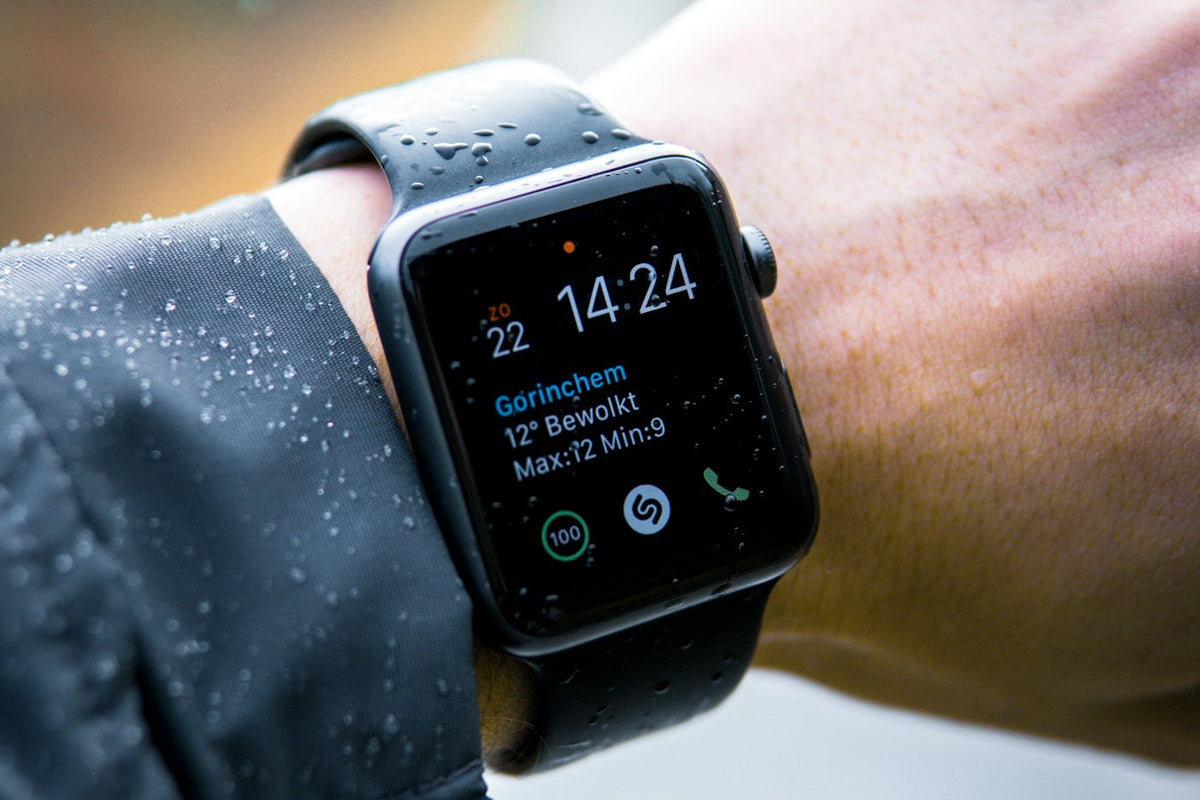
Siri Recap is an Apple Intelligence feature that ambiently takes notes on your conversations through the day and turns them into summaries you read on your Apple Watch. It is one of four features Apple groups under the name Audio Intelligence, announced on 9 September 2026 alongside Apple Watch Series 12 and Apple Watch Ultra 4. Apple describes the group as features that "use the microphones of Apple Watch, the power of Apple silicon, and on-device and cloud-based AI models to help you detect sounds, identify music, and stay present and engaged". Here is what each one does, what you need, and what happens to the audio.
| Feature | What it does | What you need |
|---|---|---|
| Sound Recognition | Detects sirens, alarms and doorbells and notifies you | Series 12 or Ultra 4, plus iPhone 11 or later on iOS 27 |
| Music Recognition | Identifies songs playing nearby and shows them in the Smart Stack | Series 12 or Ultra 4, plus iPhone 11 or later on iOS 27 |
| Live Rewind | Shows the last 15 seconds of speech as text when you double-press the Digital Crown | Series 12 or Ultra 4, plus iPhone 16 or later, plus Siri AI in beta |
| Siri Recap | Summarises your conversations through the day | Series 12 or Ultra 4, plus iPhone 16 or later, plus Siri AI in beta |
Outside coverage has described it in plainer terms. TechCrunch called Siri Recap a use of "ambient listening to take high-level notes of your conversations", with Apple Intelligence generating "a title, summary, and key points from the conversation" that you review in the Siri app. It also noted that the idea itself is not new: notetaking tools such as Granola and Circleback already do something close to this, and both already have Apple Watch apps. What changes is that Apple is building it into the watch rather than asking you to install anything. TechCrunch also confirms the control options, which are to keep it always on, put it on a schedule, or turn it off completely.
Sound Recognition
The most straightforward of the four, and an accessibility feature first. Apple's description: "Sound Recognition detects important sounds like sirens, alarms, and doorbells, and notifies you, even when your iPhone is not with you." It is aimed particularly at people who are deaf or hard of hearing, and it works passively in the background.
You turn it on from your iPhone, in Settings, then Accessibility, then Sound and Name Recognition, then Sound Recognition, where you enable "Detect using Apple Watch". If you already had it switched on for your iPhone it activates on the watch automatically.
This is the one with the lowest hardware bar. It needs the new watch, but only an iPhone 11 or later, or an iPhone SE from the second generation onward, running iOS 27.
Music Recognition
Powered by Shazam, which Apple owns. It "automatically detects the song playing in the background and displays the title and artist name in the Smart Stack, all without tapping the widget". No button, no asking.
You enable it in the Settings app on the watch itself, under Smart Stack, by toggling Music Detection. It can also be turned on from the widget when it first appears.
The privacy design here is worth understanding because it tells you how the rest works. The watch does not send a recording to Shazam. It creates what Apple calls "an acoustic signature of that song (a compact representation that can't be reversed into the original audio)". That signature, not the audio, is what gets sent.
Live Rewind
This is the one people will demonstrate to their friends. It "recalls what was just said in the last 15 seconds by showing a text snippet on your Apple Watch when you double-press the Digital Crown".
It is deliberately not passive. Apple is explicit that it "only activates when you deliberately double-press the Digital Crown", and when you do, the watch plays an audible chime and shows a full-display animation with a microphone indicator. In other words it is designed to be obvious to you and to anyone looking at your wrist.
The text does not hang around. Apple says it "disappears permanently from your Apple Watch approximately 30 seconds after the Apple Watch display dims, unless you save them to the Siri app or tap Ask Siri". So it is genuinely a rewind rather than a record: you catch the thing you just missed, and then it is gone unless you act.
You switch it on in the Watch app on your iPhone, under Siri, then Live Rewind, by enabling "Double Click Digital Crown".
Siri Recap
The most ambitious of the four. Apple's own wording is that it "ambiently takes notes on your conversations throughout your day and creates high-level Apple Intelligence-generated summaries", with the stated goal of helping you remember details while staying present.
Three things about how it behaves in practice.
You can schedule it. Apple lets you "set a schedule based on time and/or location (for example, 'only at work' or 'never at night')", or just switch it on and off manually. There is a Control Center toggle for it at any time. That is a more thoughtful design than a single on switch, and it matters if you want capture at the office but not at home.
Summaries live in the Siri app. They appear in a Recaps tab, and you can "view, edit, and delete your Siri Recap summaries at any time". You can also export them to other apps including Notes and Journal.
They expire. This is the detail most coverage skips: "Your summaries auto-delete after 7 days if you choose not to save them." Siri Recap is a rolling week by default, not an archive. If you want to keep a day, you have to save or export it within seven days.
What a Recap Will Not Tell You
Two limits are easy to miss, and both come from Apple rather than from critics.
It does not work out who is speaking. Apple's wording is that "Siri Recap will not identify and attribute speakers". A name can end up in a summary only if somebody says it out loud during the conversation. It is never derived from voice recognition. In practice that means a recap can tell you that a deadline moved to Thursday but not reliably who moved it. Read a summary of a meeting with four people in it and the attribution is your job.
Some content is filtered out. Apple says summaries exclude "language that promotes self-harm or hateful speech, financial data, government-assigned identifiers, authentication data, and certain personal identifiers". It also concedes that the filtering "may not remove all sensitive information". That cuts both ways. A summary is a less dangerous thing to leave open on a screen. It is also a less complete record, so if the thing you were trying to remember was an account number, a case reference or a code someone read out, it may simply not be there.
What Actually Happens to the Audio
This is the most technically interesting part, and Apple has published more detail than most companies do.
The claim is unambiguous: "Audio is not recorded or stored. Audio Intelligence features don't create audio recordings. No audio can be accessed by the operating system, apps, you, or even Apple."
The mechanism is a piece of hardware Apple calls the Secure Exclave, which it describes as "a hardware-isolated compartment built into the silicon of Apple Watch and iPhone that processes sensor data separately from the rest of the system". Audio enters a protected buffer inside the S11 chip's Secure Exclave, and Apple states that data processed there "can't be accessed by the operating system, apps, you, or even Apple. Once processed, this data is immediately deleted."
For Siri Recap specifically, the chain runs like this. The Secure Exclave on the watch encrypts the detected audio and sends it to the Secure Exclave on your paired iPhone, where it is decrypted, transcribed and condensed. An encrypted condensed version, which Apple says is designed to be less than half the length of the original transcript, then goes to Private Cloud Compute to be summarised.
Finished summaries and saved Live Rewind snippets held in the Siri app are "end-to-end encrypted when synced through iCloud, so only you can access them, and only on your trusted devices".
So there is a transcription step, and a cloud step, but by Apple's account no audio file is ever created that a person or an app could open.
What You Need, and Where It Works
The two speech features have a much higher bar than the two sound features.
Live Rewind and Siri Recap both require an Apple Watch Series 12 or Apple Watch Ultra 4, paired with an iPhone 16, 16 Plus, 16 Pro, 16 Pro Max or a later model, with Apple Intelligence and Siri AI enabled. Siri AI is in beta.
They are not out yet. Apple's wording is that "Live Rewind and Siri Recap will be available in beta later this year, starting with English", with more languages to follow. Apple also notes that "Siri AI will not initially be available in the EU on iOS, iPadOS, and watchOS".
There are age restrictions too. Neither feature is available to users under 13, and for under-18s on a Child Account a parent or guardian has to switch them on.
How to Turn Each One On or Off
Collected in one place, since they live in different settings.
Sound Recognition: iPhone Settings, then Accessibility, then Sound and Name Recognition, then Sound Recognition, then Detect using Apple Watch.
Music Recognition: Settings app on the Apple Watch, then Smart Stack, then Music Detection.
Live Rewind: Watch app on iPhone, then Siri, then Live Rewind, then Double Click Digital Crown.
Siri Recap: Watch app on iPhone. Set a schedule by time or location, or toggle it manually. There is also a Control Center toggle on the watch.
What Apple Says It Gets Wrong
Worth quoting in full, because it is unusually direct for a product page: "Siri Recap summaries and Live Rewind text snippets are generated using Apple Intelligence and may be incomplete or inaccurate. Important details may be omitted, misunderstood, or summarized incorrectly."
That applies to every AI summarisation product, not just Apple's. A summary is a model's judgement about what mattered in a conversation, and judgement can be wrong. If a detail is consequential, a dosage, a deadline, a number, it is worth confirming rather than trusting the summary.
How the Feature Has Been Received
The argument that followed the announcement was not mainly about accuracy or battery life. It was about the people who are not wearing the watch.
The MacRumors forum discussion of the feature ran to hundreds of comments, and the dominant objection was consent. Siri Recap is opt-in for the wearer and not for anybody standing next to them, a point one commenter reduced to "Not for the people around you it isn't." Others argued that a feature like this normalises "the behaviour of 24x7 recording everything everywhere", and predicted that military and corporate sites would ban it. Supporters in the same thread countered that it is off until you switch it on, and that no audio is stored at any point, so what survives is text rather than a recording of anyone's voice. These are reader comments rather than expert analysis, but the split is a fair picture of where the argument sits.
Writing at TechCrunch, Ivan Mehta put the middle position: "an always-listening feature will likely raise privacy concerns because Siri Recap may still capture sensitive information in its summaries."
Apple's own answer is guidance rather than a rule. It advises wearers to "be mindful" of the people around them, noting that "conversations might be private or sensitive". It stops short of requiring consent from anyone else present. Nothing in the design asks the other person, which is the part the objection is really about, and it is not unique to Apple. Any always-on wearable raises it.
FAQ
What is Siri Recap? An Apple Intelligence feature that takes ambient notes on your conversations through the day and produces high-level summaries, readable in the Recaps tab of the Siri app. It runs on Apple Watch Series 12 and Ultra 4 and ships in beta later in 2026, starting in English.
Does Apple Watch record your conversations? Apple says no. Its wording is that "Audio is not recorded or stored" and that Audio Intelligence features "don't create audio recordings", with raw audio processed inside a hardware-isolated Secure Exclave and immediately deleted afterwards.
Does Siri Recap know who is speaking? No. Apple states that "Siri Recap will not identify and attribute speakers". A name can appear in a summary only if someone says it out loud during the conversation, and it is never derived from voice recognition. So a recap can tell you what was said, but not reliably who said it.
How long do Siri Recap summaries last? Seven days. They auto-delete after that unless you save them or export them to an app such as Notes or Journal.
What is Live Rewind? A feature that shows the last 15 seconds of speech as text when you double-press the Digital Crown. It activates only on that deliberate double-press, plays a chime, and the text disappears about 30 seconds after the display dims unless you save it.
What is the Secure Exclave? Apple describes it as a hardware-isolated compartment built into the silicon of Apple Watch and iPhone that processes sensor data separately from the rest of the system. Data processed there cannot be reached by the operating system, apps, the user, or Apple, and is deleted once processed.
For how these features compare with a dedicated always-on device, and who should skip buying one now that Apple has shipped this, see Siri Recap vs an AI Memory Pendant.
Sources: Apple Support, About Audio Intelligence features on Apple Watch Series 12 and Apple Watch Ultra 4; Apple Newsroom, Apple Watch Series 12; MacRumors, Apple Explains What Happens to Conversations Siri Recap Hears, 10 September 2026; TechCrunch, Ivan Mehta, Apple Watch's new feature listens to your chats and recaps them, 9 September 2026. Apple quotations are taken from Apple's own support document and from Apple's statements reported by MacRumors, verified 11 September 2026. Quoted forum comments are reader posts on the MacRumors discussion thread, not expert opinion. Availability, languages and regional support are Apple's stated plans and may change.
Share:
Siri Recap vs an AI Memory Pendant: What Apple's Feature Actually Does
Siri Recap vs Granola: Which AI Note-Taker Actually Fits Your Day?