


ADHD in women is often missed or diagnosed late because it tends to look different from the stereotype of a restless, disruptive boy. Women and girls with ADHD more often have mainly inattentive symptoms, more often turn their difficulties inward, and are more likely to be treated first for anxiety or depression. Many work hard to hide their struggles. As a result, plenty of women are only assessed in adulthood, often after years of feeling that everyday life takes far more effort than it seems to for everyone else.
Why ADHD in women is so often missed
For decades, research and diagnostic criteria were built mostly around boys. A 2014 review by Patricia Quinn and Manisha Madhoo described ADHD in women and girls as a "hidden diagnosis" and set out several reasons it is overlooked:
- Different presentation. Girls are more likely to have the predominantly inattentive presentation: daydreaming, losing track, disorganisation, quietly falling behind (see the three ADHD presentations). These symptoms rarely disrupt a classroom, so they are less likely to prompt a referral.
- Internalising rather than externalising. Hyperactivity in girls may show up as constant talking, fidgeting or an inner restlessness rather than running around. Difficulties are more often expressed as worry, low mood or self-criticism.
- Misdiagnosis. Women with ADHD are often diagnosed first with anxiety or depression. Those conditions frequently do co-occur with ADHD, but treating them alone can leave the underlying ADHD unrecognised (see ADHD vs anxiety).
- Compensation and masking. Many girls learn early to cover their difficulties with extra effort, careful rules and people-pleasing. It can work for years, at a cost (see ADHD masking).
- Expectations. Parents, teachers and clinicians who expect ADHD to look like a hyperactive boy may not consider it in a bright, quiet girl who is struggling.
Boys are diagnosed with ADHD considerably more often than girls in childhood. In adults the gap is much smaller, which suggests many girls are simply missed rather than unaffected.
How ADHD can look in women
Every person is different, but women with ADHD commonly describe:
- Feeling chronically overwhelmed by everyday admin, housework and logistics.
- Working much harder than others to appear organised, then feeling exhausted.
- Losing track of time, plans and belongings (see time blindness).
- Intense emotions and strong reactions to criticism or perceived rejection (see rejection sensitive dysphoria).
- Being described as "a bit scatty", "chatty" or "too sensitive" for most of their lives.
- Sensory overwhelm in noisy, busy places (see sensory overload).
- Coping well while life is structured, then struggling when demands increase, for example at university, in a demanding job, or after having children.
Hormones and ADHD symptoms
Many women report that their ADHD symptoms change across the menstrual cycle, during pregnancy and after giving birth, and around perimenopause and menopause. Oestrogen interacts with brain chemicals involved in attention and mood, including dopamine, and reviews of ADHD in women note hormonal change as a likely influence on symptoms.
The research here is still developing, and experiences vary a lot. If you notice your focus, mood or coping shift at particular times, it is worth tracking it for a few months and taking those notes to a clinician. That pattern can be useful information for treatment.
Diagnosed later in life
Many women are first assessed in their thirties, forties or later, sometimes after a child is diagnosed and the description sounds familiar. A late diagnosis can bring relief, grief and a lot of questions all at once. We cover that experience in diagnosed with ADHD as an adult, and the assessment process itself in how adult ADHD is diagnosed.
Getting assessed
If this sounds like you, a few things can make an assessment more useful:
- Write down examples. Specific everyday situations where attention, organisation, time or emotion cause problems, now and in childhood.
- Find childhood evidence if you can. School reports with comments like "could do better if she concentrated" or "talks too much" can be relevant.
- Mention other diagnoses. Anxiety, depression or eating difficulties do not rule ADHD out, and the full picture helps the clinician.
- Describe the effort, not just the outcome. If you are coping but only by working twice as hard as everyone else, say so. Coping is not the same as being unaffected.
Frequently asked questions
Why is ADHD underdiagnosed in women?
Women and girls more often have inattentive symptoms, express difficulties as anxiety or low mood, and hide their struggles through extra effort. Because ADHD research and expectations were built largely around hyperactive boys, these presentations are easy to miss.
What does ADHD look like in adult women?
Common experiences include feeling constantly overwhelmed, working very hard to seem organised, losing track of time and belongings, intense emotions, and sensitivity to criticism. Many women cope until demands increase, then struggle.
Can hormones affect ADHD symptoms?
Many women report that symptoms change across the menstrual cycle, pregnancy and menopause, and hormonal change is recognised as a likely influence. Research is still developing, so tracking your own pattern and discussing it with a clinician is a good step.
Is it too late to get diagnosed as an adult?
No. ADHD can be assessed at any age, and many women are first diagnosed in adulthood. A diagnosis can open up treatment options and help make sense of past experiences.
Legend One at a glance
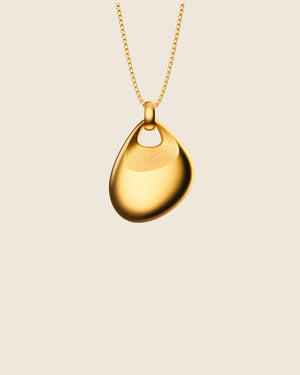
- What it is: an AI memory pendant from Legend Memory AI, made for people with ADHD. You wear it at chest height, it stays on all day, and a Halo light shows when it is active.
- What it does: turns your conversations into text, then into daily summaries and to-dos in the Legend App. There is no audio to play back, and none kept in your account.
- What it does not do: it is not a medical device. It does not diagnose, treat or cure ADHD, and it does not replace a clinician.
- Price: $499 USD, including the first year of membership.
Comparing options? Read our guide to the best AI pendant for ADHD, or see Legend One.
Saba Karim
CEO, Co-founder and Creative Director
This article is general information, not medical advice. ADHD presents differently in different people; for assessment or treatment, speak to a qualified clinician.
Sources: Quinn and Madhoo (2014), A review of attention-deficit/hyperactivity disorder in women and girls: uncovering this hidden diagnosis, Primary Care Companion for CNS Disorders; NIMH, Attention-Deficit/Hyperactivity Disorder.
Share:
ADHD Coaching vs Therapy: What Each One Is For
ADHD Coaching vs Therapy: What Each One Is For