


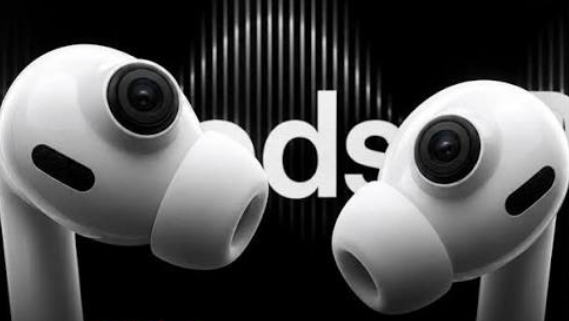
One of the most persistent rumors in tech right now is that Apple wants to put cameras in your AirPods. It sounds strange until you realize what it signals about where the entire industry thinks wearables are headed, and it raises a question worth sitting with.
What the leaks actually say
For a couple of years now, reliable analysts and leakers have described Apple working on AirPods with tiny cameras built into the stems. The key detail people often miss: these are not meant to be cameras like the one on your iPhone. Reporting describes infrared cameras designed to read your surroundings and hand gestures, feeding that environmental information to Apple Intelligence so the earbuds can understand the world around you rather than shoot photos or video.
The timeline has been a moving target. Early rumors pointed to a 2026 launch, later reports pushed it toward late 2027, and one prototype-focused leaker recently claimed the project had been "suspended" entirely, though other reporting had it in advanced testing stages just weeks earlier. In other words, this is very much a leak-and-speculation story, not a confirmed product. But the direction of travel is clear enough, and Apple is not the only one heading there.
One telling detail from the reporting: Apple has apparently considered adding a small LED light on each earbud to signal when the cameras are active. That single design choice says a lot. When you have to build in a light to reassure the people around someone that they are not secretly being watched, you are acknowledging the thing everyone quietly feels about cameras on the body.
The direction the whole industry is heading
Zoom out and a pattern appears. Cameras in earbuds. Cameras in smart glasses. Cameras and sensors in the home speakers companies like OpenAI are building. The prevailing bet across the industry is that the next generation of AI devices should see. That they should perceive your environment visually, watch your space, and use that visual understanding to be helpful.
There is a real logic to it. Vision gives a device context, and context makes AI more capable. But it also crosses a line that a lot of people feel before they can articulate it. A device that watches is a different thing from a device that listens, and both are a different thing again from a device that simply remembers. The more sensors we strap to our bodies and scatter around our rooms, the more the question shifts from "what can this do for me" to "what is this taking in, and who else is in frame."
The question underneath
Here is the thing worth asking. Do you actually want your wearables to watch the world, or do you just want to hold onto your own life?
Because those are not the same goal, and the industry has quietly conflated them. The pitch for camera wearables is that seeing makes them smarter. But for most people, the everyday problem is not that their devices cannot see. It is that their own memory keeps dropping things, the name, the plan, the idea, the conversation. Solving that does not require a camera pointed at the room. It does not require watching anyone at all.
A memory device that doesn't watch
This is exactly the line Legend is built on.
Legend is a memory pendant, not a camera. There is no lens pointed at the people around you, no infrared sensor mapping your space, no visual feed of your life being taken in. Legend quietly transcribes and summarizes the moments of your day into searchable memory, without ever creating an audio file, so the things you would have forgotten are held for you and nothing else. It is designed to help you remember your life, not to surveil the room you are standing in.
That restraint is a choice, not a limitation. In a moment when the whole industry is racing to add more cameras, more sensors, and more watching, Legend is deliberately doing less: capturing only what helps you remember, and leaving everyone else in the room out of it. For a device you wear all day, and that the people around you share space with, that restraint is exactly what earns the trust to keep wearing it.
Where this leaves us
Camera AirPods may ship in a year, or in three, or quietly never. But the impulse behind them, the belief that our wearables should watch the world, is not going away, and it is worth deciding how you feel about it.
Not every AI device needs a camera. Some of the most useful ones will be the devices that take the least from the room around you, and give you back the most of your own life. That is the kind of device Legend is trying to be: something that helps you hold onto what matters, without watching anything at all.
Share:
OpenAI Is Building a Talking Speaker for Your Home. Apple Is Suing Over It.
Kylie's Meta Glasses and Snap's Specs Just Launched. Here's What They're For.