


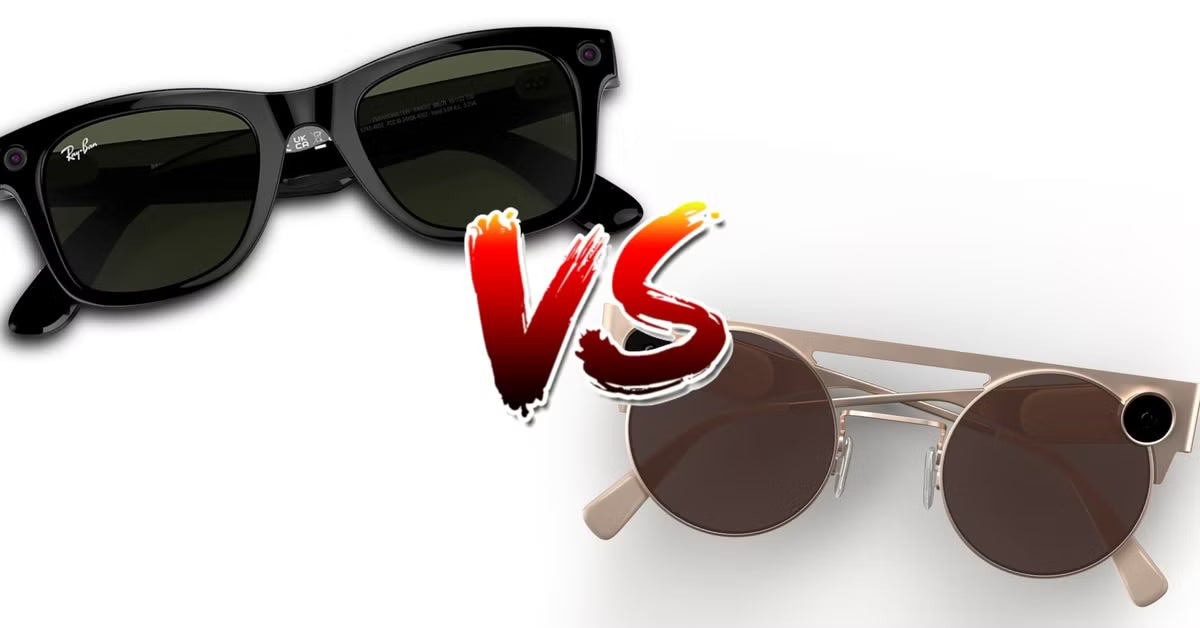
The summer of 2026 made one thing official: the tech industry has decided that the future of computing sits on your face. Within weeks of each other, Meta and Snap both launched major new smart glasses, coming at the idea from completely different directions. Here is what each one actually does.
Meta Glasses, now with Kylie Jenner
In June, Meta launched its first eyewear under its own brand name, dropping the Ray-Ban wordmark it had used for years, in partnership with EssilorLuxottica. The lineup includes three styles: the Meta Adventurer, the bolder Meta Fury, and the headline-grabber, Meta Glasses by Kylie, a slim oval frame co-designed with Kylie Jenner.
They start at $299, with the Kylie edition at $399. What are they for? These are camera-and-audio AI glasses, not screens on your face. You use them to capture photos and video hands-free, take calls, listen to music through open-ear speakers, get live translation, and ask Meta's AI questions about what you are doing or seeing, all by voice. The Kylie edition leans hard into lifestyle: it responds in Kylie Jenner's actual voice, chimes when you put it on, and carries a small sparkling gem near the camera, a wink at the paparazzi flashes that follow her. The whole point of the collab is to move smart glasses out of the gadget aisle and into fashion and beauty.
In short: everyday AI glasses for capturing moments, staying connected, and asking an assistant about the world, designed to look like eyewear you would actually wear.
Snap Specs, a computer for your eyes
Snap took a very different swing. At a spatial computing conference in June, it unveiled Specs, its first consumer augmented reality glasses after more than a decade of development, priced at $2,195 and shipping this fall.
Where Meta's glasses are about capture and audio, Specs are about display. These are standalone AR glasses, no phone or tether required, that project digital visuals into your field of view. What are they for? You can pull up a virtual screen that scales from a 24-inch monitor for work up to a 115-inch display for watching a movie, play shared AR games and experiences with friends, run apps and "Lenses" laid over the real world, and use AI that understands the space around you. The lenses even tint automatically for indoor or outdoor use. It is aimed first at developers and tech enthusiasts, and the steep price reflects that. Snap's CEO framed it as a bet on a post-smartphone future.
In short: a wearable spatial computer that puts a screen and interactive AR into the world in front of you.
Two visions, one direction
Meta and Snap are chasing different versions of the same idea. Meta wants stylish, affordable AI glasses that capture your life and answer your questions. Snap wants a premium computer for your eyes that overlays the digital world onto the real one. One is fashion-forward and camera-first; the other is display-first and developer-focused. But both are built on the same core bet: that the next computing platform is something you wear on your face, packed with cameras and sensors taking in the world around you.
And then there's Legend
Legend is playing a different sport entirely: instead of a camera on your face taking in the world, it is a memory pendant at your collarbone that quietly transcribes and summarizes your day into searchable memory, without ever creating an audio file, so you can remember your own life rather than augment your view of everyone else's.
The glasses race is about changing what you see. Legend is about holding onto what you would otherwise forget. Same era of AI wearables, completely different field.
Share:
Apple's AirPods Might Get Cameras. Here's the Bigger Story.
What Oura Did for Health, Legend Is Doing for Memory