


Every day the wearable and AI hardware category inches closer to the mainstream moment it's been promising since the first smart pins and memory pendants showed up on Kickstarter. This week's news cycle is a good snapshot of where things actually stand: legacy players circling back to old ideas, upstarts racing to ship pendants before their rivals do, and the robotics side of "wearable AI" quietly becoming a bigger financial story than any single gadget launch. Here's what happened in the last 48 hours, and why it matters if you're tracking where AI hardware is headed next.
Apple's Ring and Round Watch Rumors Are Back
Apple's wearable roadmap is once again the subject of speculation, with reports resurfacing that the company is seriously evaluating both a long-rumored Apple Ring and a round-cased Apple Watch. Neither is new territory for the Apple rumor mill, but the timing is notable: smart rings have quietly become one of the fastest-growing categories in wearable tech, largely because they deliver continuous health and activity tracking without the charging habits or screen fatigue of a watch. A round Apple Watch, meanwhile, would be a significant design departure for a product line that has kept its rectangular face since 2015.
What's interesting from an industry standpoint isn't whether Apple ships either product this year (it almost certainly won't), but what its interest signals. When Apple starts publicly circling a form factor, it usually means the underlying sensor and battery technology has matured enough to make the category viable at scale. Smaller wearable brands have been building toward exactly that inflection point for the past two years.
The AI Pendant Race Keeps Getting More Crowded
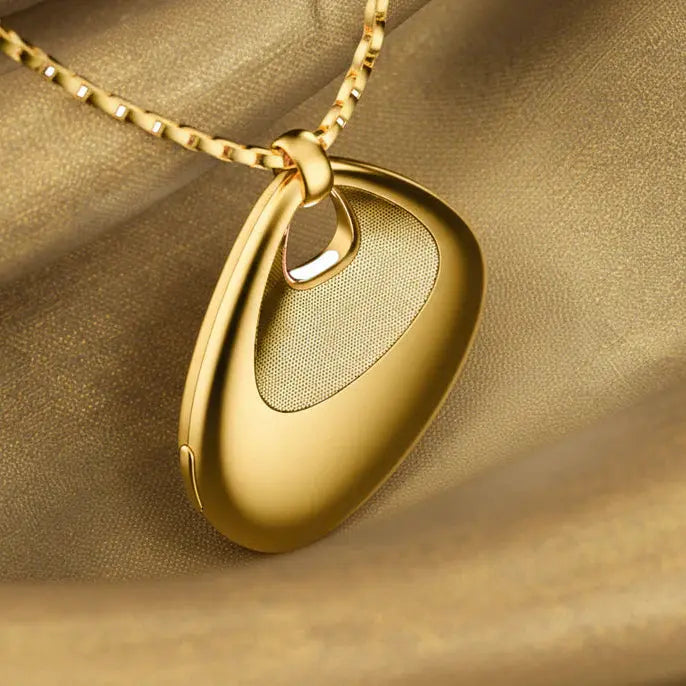
If you've been following the memory-and-recall wearable space, you already know the pendant format has become the default shape for "ambient AI" devices: small enough to wear all day, always listening, and designed to fade into the background rather than demand attention like a phone or a pin. Meta has been reported to be building its own AI pendant alongside a broader "Wearables for Work" business subscription play, aiming the device squarely at professional use cases like meeting capture and task follow-up rather than consumer novelty.
Apple is reportedly working on something similar: an AirTag-sized AI pendant that leaked details describe as a pared-down, more reliable take on the ideas Humane tried to popularize with its AI Pin. That's a notable framing. Rather than chasing a flashy standalone gadget with its own app ecosystem, the current generation of AI pendants is converging on a simpler pitch: capture what you hear, surface it when you need it, and get out of the way otherwise. It's the same thesis that's driven interest in voice-first memory devices like Limitless and Bee, and it's a useful lens for evaluating any new entrant in this space. Does it reduce friction, or does it just add another screen to check?
Smart Glasses Still Look Like the Category to Beat
Smart glasses remain the most heavily resourced corner of the AI wearable market. Samsung and Google are reportedly on track to ship a jointly developed pair this fall, built around Gemini's multimodal "see what I see" capabilities, though details on data handling and privacy policy are still thin. Apple is separately rumored to be exploring AI-powered glasses of its own, following the display-free Ray-Ban Meta playbook that proved there's real consumer appetite for camera-and-audio glasses that don't try to be a full AR headset.
The pattern across all of these efforts is consistent: everyone is chasing the same insight that glasses are the one wearable form factor people are already used to putting on their face every day, which makes them a uniquely low-friction delivery vehicle for an AI assistant that can see and hear the world alongside you.
OpenAI's Hardware Ambitions Move Closer to Reality
OpenAI has confirmed that its first hardware device remains on track for a 2026 reveal, with continued reporting pointing toward a wearable form factor rather than a phone-replacement device. Details are still scarce, but the involvement of former Apple design lead Jony Ive's team has kept expectations high that whatever ships will prioritize industrial design and ambient interaction over a traditional screen-and-app interface. If OpenAI does land on a wearable, it would put the company in direct competition with the same pendant and glasses makers already jockeying for position, a sign of how much consensus has formed around "wearable" as the next major interface for AI, even among companies with no prior hardware experience.
The Robotics Side: Unitree's IPO Is a Bigger Deal Than It Looks
It's easy to think of "wearable AI hardware" as a category limited to things you put on your body, but the same underlying technology stack (compact sensors, edge inference, battery-efficient AI processing) is what's enabling the humanoid and quadruped robotics boom happening in parallel. Hangzhou-based Unitree Robotics is preparing a Shanghai listing seeking to raise roughly 6.1 billion yuan (about $904 million), backed by investors including Tencent, Alibaba, and Meituan. The company, known for its G1 and H1 humanoid robots and its quadruped systems, reported nearly 1.7 billion yuan in 2025 revenue, with more than 40% coming from overseas markets.
That IPO is worth watching even if you have zero interest in robots, because it's a real financial market signal, not a press release, about how much capital is willing to bet on embodied AI hardware right now. When that kind of money moves, component costs for the sensors and actuators shared across robotics and wearables tend to fall, which is good news for smaller wearable hardware makers riding the same supply chain.
Smaller Players Aren't Sitting Still Either
Not every story this week involves a trillion-dollar company. Nothing, the London-based consumer electronics brand known for its transparent-backed phones, is reportedly planning an AI-driven push into smartwatches and audio hardware. It's a reminder that the AI wearable race isn't only being run by Apple, Meta, Google, and OpenAI. Mid-sized challenger brands see an opening too, betting that a distinct design language and a lower price point can win over buyers who find the flagship players' devices either too expensive or too locked into a single ecosystem.
The Takeaway
Put all of this together and a clear shape emerges: the wearable AI hardware market hasn't settled on one winning form factor yet, and that's probably good news for buyers. Pendants are optimizing for passive capture and low friction. Glasses are optimizing for seeing the world the way you do. Rings and watches are optimizing for the health data you already trust wearables to collect. And the capital pouring into robotics is quietly subsidizing the component costs that make all of the above cheaper to build.
This is a good moment to look at what Legend has focused on since the start. While the rest of the industry is still deciding between rings, glasses, pins, and pendants, Legend picked the pendant format early: a voice-first, screen-free wearable that quietly transcribes conversations in the moment and hands everything back to you afterward in the Legend App, complete with daily summaries and auto-generated to-dos. The stories above are really the rest of the industry catching up to that same idea. Whatever form factor eventually wins the mainstream, the goal Legend was built around hasn't changed: an AI wearable you forget you're wearing, that remembers for you so you don't have to.
Sources: Tech Startups: Top Tech News, August 10, 2026; Verak World: Daily Tech News, August 10, 2026; Wareable: OpenAI confirms debut hardware device on track for 2026; TechCrunch: Meta is reportedly developing an AI pendant; MacRumors: Apple's AirTag-sized AI pendant; Tech Times: Samsung/Google smart glasses shipping fall 2026; RS Web Sols: Nothing's AI-driven smartwatch and audio plans.
Share:
What Oura Did for Health, Legend Is Doing for Memory
OpenAI ChatGPT Speaker: Price, Release Date, and How It Compares to HomePod and Echo