


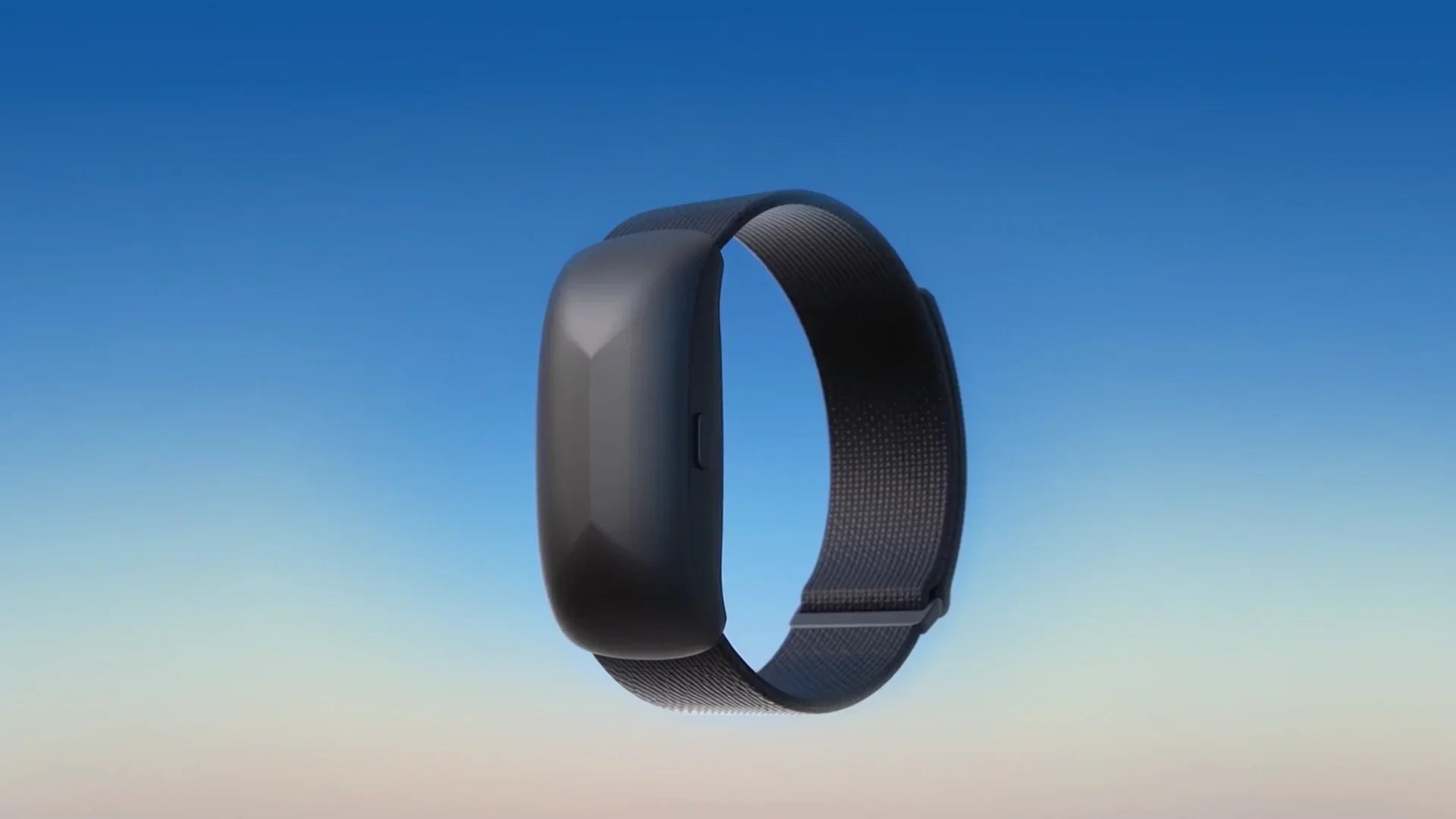
Memoket is one of the newer entrants in the fast-growing category of AI memory wearables, small devices you wear that capture your conversations and turn them into notes, summaries, and action items. Here is what it is, what it does, and how it stacks up against the other wearable people most often compare it to: Bee, the AI wearable Amazon acquired.
What Memoket is
At the center of Memoket is a small device called the Memoket Gem. You press it once and it captures a conversation, and the companion app then transcribes it, generates summaries, pulls out tasks and follow-ups, and stitches context across multiple conversations into a single coherent recap. It also shows where each point came from, whether a recording or an online source, so you can verify what you are looking at.
Its signature feature is flexibility of form. The Gem is designed to slide into different attachments so you can wear it however suits the moment: as a wristband sized for most wrists, alongside an Apple Watch with an included attachment, as a pendant, or as a clip. One device, several ways to wear it. The pitch leans on being lightweight and adaptable, "the lightest AI wristband," with the option to reconfigure it for hands-free use in any setting.
Memoket is aimed squarely at work. Its marketing targets founders, small business owners, and knowledge workers, with use cases like coffee catch-ups, spontaneous client calls, seminars and trade shows, team meetings, interviews, and doctor visits. It connects with the tools that crowd sit in, including Google Calendar, Gmail, Outlook, Slack, Notion, ChatGPT, and automation platforms like n8n, so summaries and next steps flow into an existing workflow.
Commercially, it has run an early-bird reservation campaign, promotes a Product Hunt "#1 Product of the Day" badge, and bundles a year of its app subscription with the hardware, with shipping slated to begin in the second half of 2026.
How it compares to Bee
The closest comparison is Bee, and the two are genuinely similar in concept, which is why people line them up against each other.
Bee is also a small, wrist-or-clip AI wearable that runs quietly in the background, captures conversations, and turns them into structured, searchable summaries rather than raw transcripts. It breaks conversations into themed sections, surfaces daily insights, and integrates with services like Gmail and Google Calendar to turn spoken commitments into reminders, tasks, and drafted emails. It is activated by the user rather than always listening, with visual indicators when recording, and it discards the audio after transcription. Amazon acquired Bee and now sells it as a standalone product while building out its features.
So where do they differ? A few places:
On backing, Bee now sits inside Amazon, which gives it the resources and ecosystem of a tech giant behind it. Memoket is an independent product still in its early-bird and early-shipping phase.
On form factor, Memoket makes multi-wear its headline: one Gem that moves between wristband, Apple Watch attachment, pendant, and clip. Bee is typically worn as a bracelet or clip-on. Both are flexible, but Memoket pushes the "wear it your way" angle harder as a core selling point.
On positioning, Memoket leans explicitly professional, founders and knowledge workers, meetings and interviews. Bee has framed itself a bit more broadly as an everyday personal AI companion, with early use cases spanning students, older users, and professionals, and an emphasis on passive daily insights about your patterns.
On the whole, they are two takes on the same idea: a low-friction wearable that remembers your conversations for you and turns them into something useful. Memoket differentiates on adaptable form and a work-first pitch; Bee differentiates on the weight of Amazon behind it and a broader personal-companion framing.
Where this leaves the category
Memoket and Bee are both part of a wave of devices betting that the next useful wearable is one that helps you remember. They share the core loop, capture, transcribe, summarize, act, and mostly differ in form, audience, and who is backing them.
It is worth noting that this whole category is largely built around the wrist and the clip, worn as functional gadgets. That leaves room for a different design philosophy entirely. Legend, for instance, approaches the same memory problem from a jewelry-first angle, a pendant designed to be worn as something beautiful at the collarbone rather than a device on your wrist, and it keeps only the transcribed memory without storing the raw audio. Same underlying promise of remembering your life, a very different idea of what the object on your body should be.
For anyone shopping this category, the useful questions are simple: how do you want to wear it, whose ecosystem do you want to be in, and do you want a work tool, a personal companion, or a piece you would actually want to wear every day.
Share:
What Is Granola? The Bot-Free AI Meeting Notepad, Explained
Legend: The First AI Pendant Built Like Fine Jewelry